This post contains affiliate links. If you click and purchase, I may earn a small commission at no extra cost to you. Thank you for your support!
Step into the world of mid-century modern home decor, where sleek lines and retro charm meet contemporary living. This iconic style, born in the mid-20th century, continues to captivate homeowners with its timeless appeal. From minimalist interiors to eye-catching retro furniture, mid-century modern design offers a perfect blend of form and function.
Ready to infuse your space with this classic aesthetic? Let’s explore how you can bring the magic of mid-century modern into your home, creating a stylish haven that stands the test of time.
Key Takeaways
- Mid-century modern design blends retro and contemporary elements
- Clean lines and minimalist interiors are hallmarks of the style
- Iconic furniture pieces define mid-century modern spaces
- Color palettes range from bold hues to earthy tones
- Geometric patterns and organic shapes play a crucial role
- Lighting fixtures serve as functional art in mid-century decor
- DIY projects can add personal touches to your mid-century inspired home
The Essence of Mid-Century Modern Design
Mid-century modern design captivates with its timeless appeal. This style, born in the mid-20th century, continues to inspire home decor enthusiasts today. Let’s explore its roots, key features, and enduring popularity.
Origins and Influences
The mid-century modern movement emerged post-World War II, blending functionality with aesthetics. It drew inspiration from Scandinavian design, embracing simplicity and natural materials. The atomic age style also left its mark, introducing futuristic elements and bold shapes.
Key Characteristics
Mid-century modern design is known for:
- Clean lines and organic shapes
- Minimal ornamentation
- Emphasis on functionality
- Mix of traditional and non-traditional materials
- Integration of indoor and outdoor spaces
Why It Remains Popular Today
The enduring appeal of mid-century modern design lies in its versatility and timeless aesthetic. It seamlessly blends with contemporary interiors, creating spaces that feel both classic and current. The Mad Men aesthetic popularized by the TV show has further fueled interest in this style.
| Era | Key Influences | Popular Materials |
|---|---|---|
| 1940s-1960s | Scandinavian design, Atomic age style | Wood, metal, glass, plastic |
| Present Day | Mad Men aesthetic, Sustainability | Reclaimed wood, eco-friendly fabrics |
Mid-century modern design continues to inspire, blending nostalgia with contemporary sensibilities. Its clean lines and functional beauty make it a perfect fit for today’s homes.
Iconic Furniture Pieces for Mid-Century Modern Spaces
Mid-century modern design is renowned for its iconic furniture pieces that blend form and function. These retro furniture items continue to captivate homeowners and interior designers alike. Let’s explore some of the most celebrated pieces that define this timeless style.
The Eames Lounge Chair stands as a symbol of mid-century elegance. Its sculpted plywood shell and leather upholstery offer both comfort and style. Pair it with an ottoman for the ultimate relaxation spot in your living room.
For coffee tables, the Noguchi design reigns supreme. Its organic shape and glass top create a perfect balance between art and functionality. Teak wood accents often feature in these tables, adding warmth to any space.
The Saarinen Tulip Table revolutionized dining areas with its sleek pedestal base. It eliminates the need for unsightly table legs, providing a clean and uncluttered look. This versatile piece works well in both dining rooms and office spaces.
| Furniture Piece | Designer | Key Features |
|---|---|---|
| Eames Lounge Chair | Charles and Ray Eames | Molded plywood, leather upholstery |
| Noguchi Coffee Table | Isamu Noguchi | Glass top, sculptural wood base |
| Saarinen Tulip Table | Eero Saarinen | Pedestal base, various top materials |
Incorporating these iconic pieces into your home can be as simple as adding a single statement item. A molded plastic chair or a teak sideboard can instantly elevate your space’s mid-century appeal. Remember, authenticity is key when selecting retro furniture to ensure lasting quality and style.
Color Palettes that Define the Mid-Century Aesthetic
Mid-century modern home decor is known for its distinctive color palettes. The atomic age style brought bold hues and earthy tones together, creating spaces that were both vibrant and grounded. Let’s explore the colors that define this timeless aesthetic.
Bold and Vibrant Hues
The mid-century era embraced vivid colors. Think mustard yellow, tangerine orange, and avocado green. These shades injected energy into living spaces, reflecting the optimism of the post-war period. Bright blues and vibrant reds were also popular, adding pops of color to furniture and decor.
Earthy Tones and Neutrals
Alongside bold colors, mid-century design incorporated warm, natural hues. Wood tones, from light oak to rich walnut, provided a neutral backdrop. Earthy browns, soft greens, and muted golds created a connection to nature, balancing the more intense shades in the palette.
Combining Colors for Maximum Impact
The key to mid-century color schemes is balance. Pair a bold orange sofa with neutral walls for a striking look. Or use vibrant accent pieces against a backdrop of earthy tones. Don’t shy away from unexpected combinations – a mustard yellow chair can look stunning next to a teal wall.
- Use bold colors for statement furniture pieces
- Balance vibrant hues with natural wood tones
- Incorporate neutral walls to let colorful decor shine
- Experiment with complementary color pairings
By mastering these color combinations, you can create a mid-century modern space that’s both authentic and uniquely yours. Remember, the goal is to capture the spirit of the era while making it work for your home today.
Incorporating Geometric Patterns and Shapes
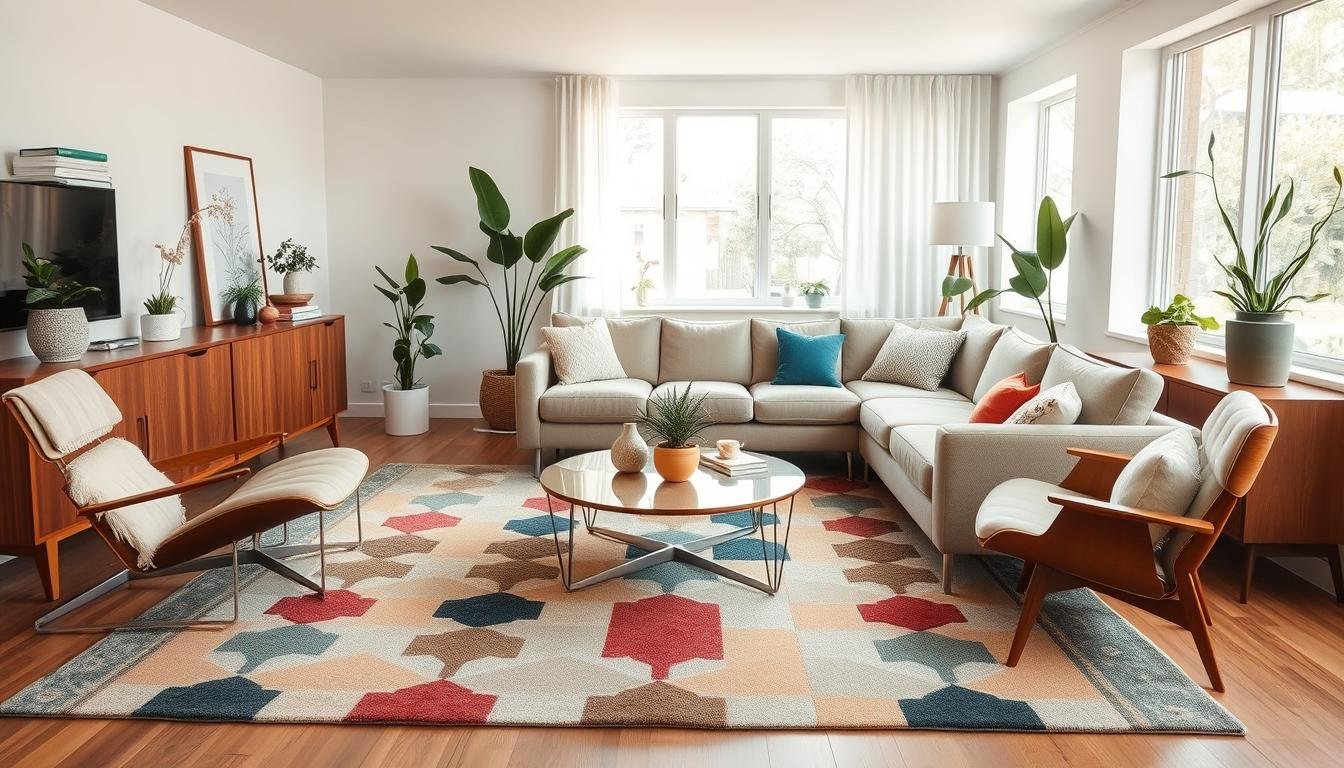
Geometric patterns play a vital role in mid-century modern design. These bold shapes add visual interest to minimalist interiors without overwhelming the space. From wallpaper to textiles, incorporating geometric elements can elevate your home’s style.
Wallpaper is an easy way to introduce geometric patterns. Choose designs with repeating shapes like triangles, circles, or hexagons. For a subtle touch, opt for a feature wall rather than covering an entire room. This approach maintains balance in minimalist interiors while creating a focal point.
Textiles offer another opportunity to showcase geometric patterns. Look for throw pillows, rugs, or curtains with abstract designs. Mix and match different shapes and sizes to create depth and visual interest. Remember to keep the color palette cohesive to avoid clashing with your minimalist interior.
“Geometric patterns are the backbone of mid-century modern design. They add personality and movement to clean, simple spaces.”
Accessories provide a low-commitment way to experiment with geometric shapes. Consider:
- Wall art featuring abstract geometric designs
- Sculptural objects with clean lines and angular forms
- Mirrors or clocks with interesting shapes
- Planters with geometric cutouts or patterns
When incorporating geometric patterns, balance is key. In minimalist interiors, use them as accents rather than overwhelming statements. This approach ensures your space remains true to mid-century modern principles while showcasing your personal style.
Lighting: The Crown Jewel of Mid-Century Modern Home Decor
Lighting plays a crucial role in mid-century modern interiors, setting the mood and showcasing the unique aesthetic of this design era. The right vintage lighting can transform a space, adding warmth and character to your home.
Pendant Lights and Chandeliers
Pendant lights and chandeliers are statement pieces in mid-century modern decor. The iconic Sputnik chandelier, inspired by the atomic age style, features multiple arms with globe-shaped bulbs. These eye-catching fixtures add a touch of retro glamour to dining rooms and entryways.
Floor and Table Lamps
Floor and table lamps are essential elements in mid-century lighting design. The Arco Floor Lamp, with its curved arm and marble base, is a perfect example of form meeting function. For a softer glow, consider the Nelson Bubble Lamps, which come in various shapes and sizes.
Sconces and Wall Lights
Wall-mounted lighting fixtures add depth and interest to mid-century interiors. Sculptural sconces with adjustable arms allow for customized lighting angles. Look for designs featuring brass accents, frosted glass, or colorful enamel shades to complement your decor.
When selecting mid-century modern lighting, focus on clean lines, organic shapes, and materials like wood, metal, and glass. Mix and match different styles to create a layered lighting scheme that captures the essence of this timeless design movement.
Materials that Epitomize the Mid-Century Look
The mid-century modern style is defined by its distinctive use of materials. These elements create the iconic look that has captivated design enthusiasts for decades. Let’s explore the key materials that bring this timeless aesthetic to life.
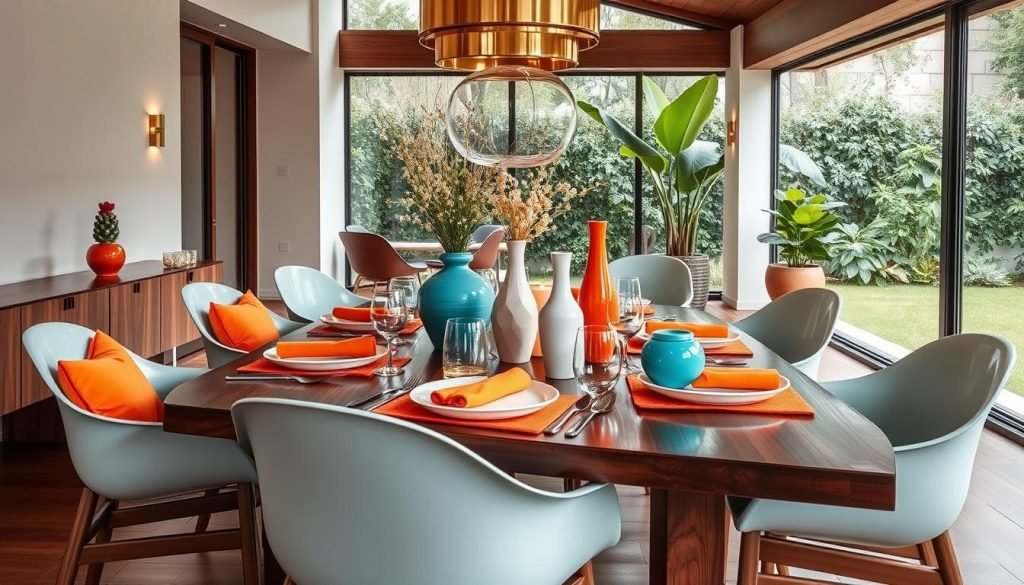
Wood plays a crucial role in mid-century design. Teak wood accents are particularly popular, adding warmth and sophistication to retro furniture pieces. Other woods like walnut and oak are also common, each bringing its unique character to the mid-century palette.
Metal elements, such as chrome and brass, provide sleek contrast to wood. These materials are often found in furniture legs, lamp bases, and decorative accents. Their reflective qualities add a touch of glamour to mid-century interiors.
Plastics, a revolutionary material of the era, are used in bold, sculptural forms. From molded chairs to colorful accessories, plastics bring a sense of innovation and playfulness to mid-century spaces.
| Material | Characteristics | Common Uses |
|---|---|---|
| Teak | Warm, durable, rich color | Sideboards, coffee tables, dining chairs |
| Chrome | Shiny, modern, sleek | Chair legs, lamp bases, decorative details |
| Molded Plastic | Colorful, sculptural, innovative | Shell chairs, light fixtures, storage units |
Incorporating these materials into your home can create an authentic mid-century look. Mix and match teak wood accents with chrome details for a balanced aesthetic. Add retro furniture pieces in molded plastic for a pop of color and texture. Remember, the key is to blend these elements harmoniously for a cohesive mid-century inspired space.
Blending Mid-Century Modern with Contemporary Elements
Mixing mid-century modern home decor with contemporary design creates a unique, timeless look. This fusion allows you to enjoy classic styles while embracing modern comforts. Let’s explore how to achieve this perfect balance in your home.
Creating a Balanced Mix
To blend mid-century and contemporary styles, start with a neutral base. Choose clean lines and simple forms typical of minimalist interiors. Add mid-century statement pieces like an Eames chair or a sunburst mirror. Balance these with sleek, modern elements such as a glass coffee table or metallic accents.
Modern Technologies in Mid-Century Inspired Spaces
Integrating technology into mid-century inspired rooms can be tricky. Hide smart home devices in vintage-style cabinets or opt for retro-looking smart speakers. Use modern LED bulbs in classic mid-century lamp designs to maintain the aesthetic while improving energy efficiency.
Updating Classic Pieces for Today’s Lifestyle
Give mid-century furniture a fresh twist by reupholstering with contemporary fabrics. Update a vintage sideboard with new hardware or a bold paint job. Mix original pieces with high-quality reproductions to create a curated look that fits your modern lifestyle without breaking the bank.
- Pair vintage wood furniture with modern metal accents
- Use bold, graphic prints inspired by mid-century patterns
- Incorporate plants to soften the look and add a natural touch
By thoughtfully combining mid-century modern home decor with contemporary elements, you can create a space that’s both nostalgic and forward-thinking. This approach allows you to honor design history while crafting a home that meets your current needs and tastes.
DIY Mid-Century Modern Decor Projects
Embrace the spirit of mid-century modern design with these exciting do-it-yourself projects. Create stunning retro furniture and geometric patterns that capture the essence of this timeless style.
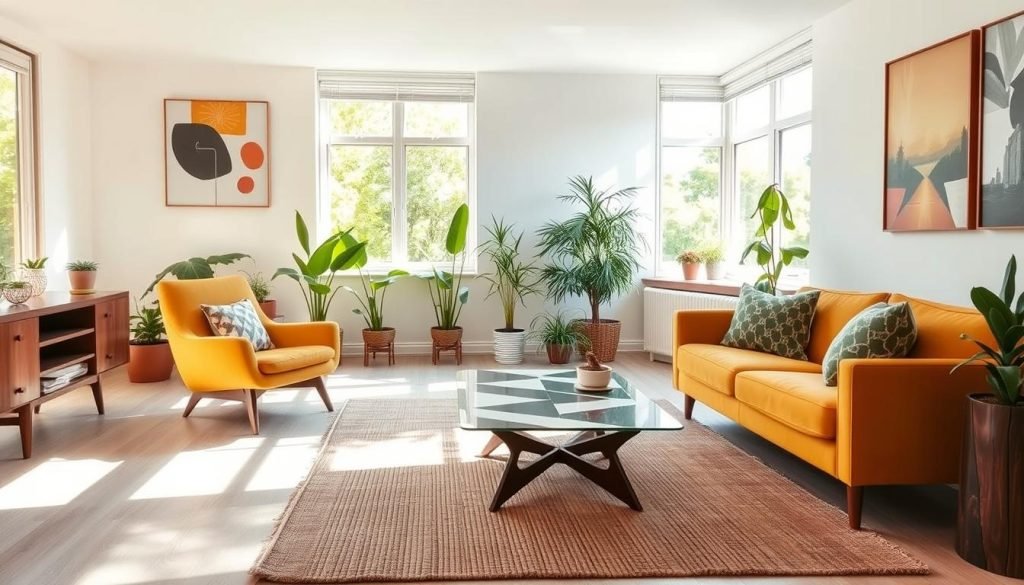
Transform your space with a geometric wall art piece. Start by painting a large canvas in a neutral tone. Use painter’s tape to create angular shapes and fill them with bold colors. This simple project adds a pop of mid-century flair to any room.
Upcycle an old dresser into a sleek piece of retro furniture. Sand down the surface, apply a teak veneer, and add tapered legs for that classic mid-century look. Complete the transformation with brass hardware for an authentic touch.
Craft a set of geometric coasters using cork tiles. Cut the tiles into hexagons and paint them with bold, contrasting colors. These functional accessories bring mid-century charm to your coffee table.
| Project | Materials | Difficulty Level | Time Required |
|---|---|---|---|
| Geometric Wall Art | Canvas, paint, painter’s tape | Easy | 2-3 hours |
| Upcycled Retro Dresser | Old dresser, teak veneer, tapered legs, brass hardware | Moderate | 1-2 days |
| Geometric Coasters | Cork tiles, paint, brush | Easy | 1-2 hours |
These DIY projects allow you to infuse your home with mid-century modern style without breaking the bank. Get creative and enjoy the process of crafting your own retro-inspired decor elements.
Conclusion
Mid-century modern home decor continues to captivate design enthusiasts with its timeless style. From iconic furniture pieces to bold color palettes, this aesthetic offers a perfect blend of form and function. The clean lines, geometric shapes, and innovative materials define the mid-century look, creating spaces that feel both retro and contemporary.
By incorporating key elements like statement lighting, organic forms, and mix-and-match patterns, you can easily bring mid-century charm into your home. The versatility of this design allows for personal interpretation, making it adaptable to various tastes and lifestyles. Whether you opt for authentic vintage pieces or modern reproductions, mid-century modern decor adds a touch of sophistication to any room.
As we’ve explored throughout this article, the enduring appeal of mid-century modern home decor lies in its ability to bridge the past and present. By embracing this timeless style, you can create a living space that’s both stylish and comfortable, reflecting your unique personality while paying homage to a golden era of design.