This post contains affiliate links. If you click and purchase, I may earn a small commission at no extra cost to you. Thank you for your support!
Are you tired of a cluttered home? Ready to embrace simple living? Minimalist home decor might be the answer you’re looking for. This design approach has gained popularity for its clean lines, open spaces, and focus on the essentials.
By adopting minimalist principles, you can transform your living space into a calm, organized retreat. Decluttering is key to this style, allowing you to focus on what truly matters. Let’s explore how minimalist home decor can bring peace and simplicity to your everyday life.
Key Takeaways
- Minimalist home decor focuses on simplicity and functionality
- Decluttering is essential for achieving a minimalist look
- A neutral color palette helps create a calm atmosphere
- Choose furniture with clean lines and minimal ornamentation
- Incorporate natural elements for a balanced, serene environment
Understanding the Essence of Minimalist Home Decor
Minimalism in home decor goes beyond a design trend. It’s a lifestyle choice that embraces simplicity and functionality. This approach to modern design focuses on creating spaces that are both beautiful and purposeful.
The Philosophy Behind Minimalism
At its core, minimalism is about living with less. It’s not just about decluttering your space, but also your mind. The philosophy encourages mindful consumption and intentional living. By surrounding yourself with only what you need and love, you create a calm and focused environment.
Benefits of a Minimalist Lifestyle
Adopting a minimalist lifestyle can lead to numerous benefits:
- Reduced stress and anxiety
- Increased focus and productivity
- More time for experiences rather than maintaining possessions
- Financial savings from decreased consumption
- Improved environmental impact through reduced waste
Key Principles of Minimalist Design
Minimalist design revolves around a few key principles:
| Principle | Description |
|---|---|
| Simplicity | Clean lines and uncluttered spaces |
| Functionality | Every item serves a purpose |
| Quality over quantity | Invest in fewer, high-quality pieces |
| Neutral color palette | Focus on whites, grays, and earth tones |
| Texture | Add depth through varying materials |
By understanding these principles, you can create a minimalist space that reflects your personal style while embracing the essence of simplicity and mindful living.
Decluttering: The First Step Towards Minimalism
Embarking on a journey towards simple living starts with decluttering. This process is more than just tidying up; it’s about creating space for what truly matters in your life.
Begin by sorting through your belongings room by room. Ask yourself: “Does this item bring value to my life?” If the answer is no, it’s time to let go. This mindful consumption approach helps you focus on essentials and reduces unnecessary clutter.
“The first step in crafting the life you want is to get rid of everything you don’t.” – Joshua Becker
Once you’ve sorted your items, organize what remains efficiently. Use these tips:
- Assign a specific place for each item
- Use clear storage containers for visibility
- Label everything for easy identification
- Regularly reassess your possessions
Remember, decluttering is not just about physical space. It can lead to mental clarity and emotional well-being. As you simplify your surroundings, you may find yourself feeling lighter and more focused.
By embracing decluttering as a lifestyle, you’re taking a significant step towards minimalism. This practice of intentional living allows you to create a space that reflects your values and supports your well-being.
Choosing a Neutral Color Palette for Your Minimalist Space
A neutral color palette forms the backbone of minimalist home decor. It creates a serene atmosphere that aligns perfectly with modern design principles. Let’s explore how to use colors effectively in your minimalist space.
The Power of White and Off-White
White and off-white shades are foundational in minimalist interiors. They reflect light, making rooms feel spacious and airy. Use pure white for a crisp look or opt for softer off-whites to add warmth. Paint walls, choose white furniture, and select light-colored flooring to create a clean canvas for your minimalist design.
Incorporating Earth Tones
Earth tones bring depth and warmth to minimalist spaces. Think beige, taupe, and soft browns. These colors complement the Scandinavian style often associated with minimalism. Use earth tones in larger furniture pieces, rugs, or as accent walls to create a cozy yet uncluttered feel.
Using Accent Colors Sparingly
While neutrals dominate, don’t shy away from accent colors. The key is using them sparingly. A pop of color in artwork, throw pillows, or a single piece of furniture can add interest without overwhelming the space. Stick to one or two accent colors to maintain the simplicity of your minimalist home decor.
- Choose muted shades for accents
- Limit accent colors to 10% of the overall palette
- Use natural materials to introduce color subtly
Remember, the goal of a minimalist color palette is to create a calm, uncluttered environment. By focusing on neutrals and using color thoughtfully, you’ll achieve a space that’s both serene and stylish.
Furniture Selection for a Minimalist Home
Choosing furniture for a minimalist home requires careful consideration. The key is to select pieces that embody simplicity, functionality, and sustainable living. Let’s explore how to furnish your space with minimalism in mind.
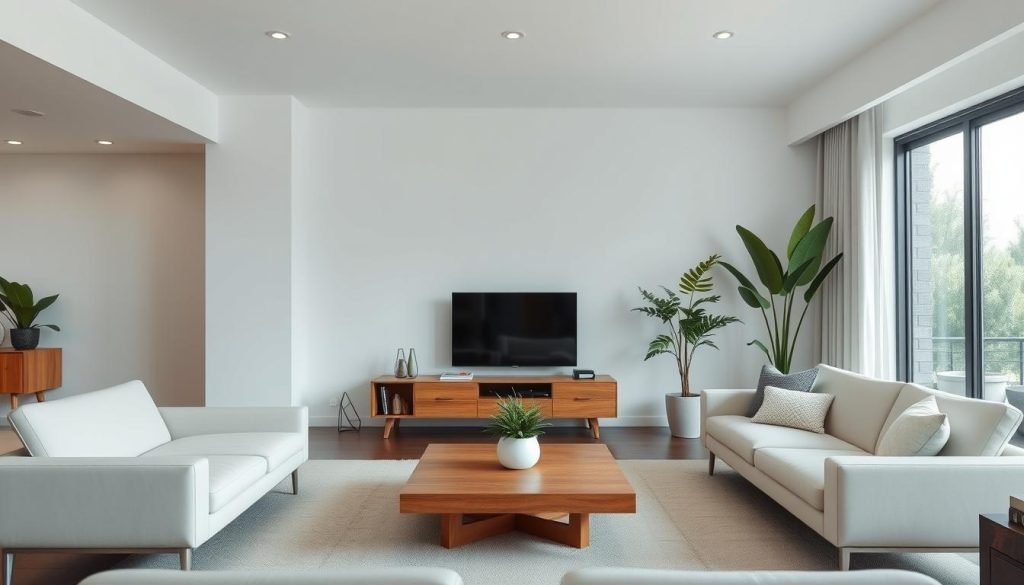
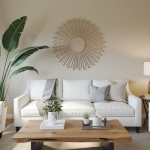
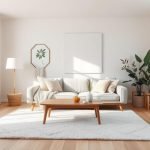
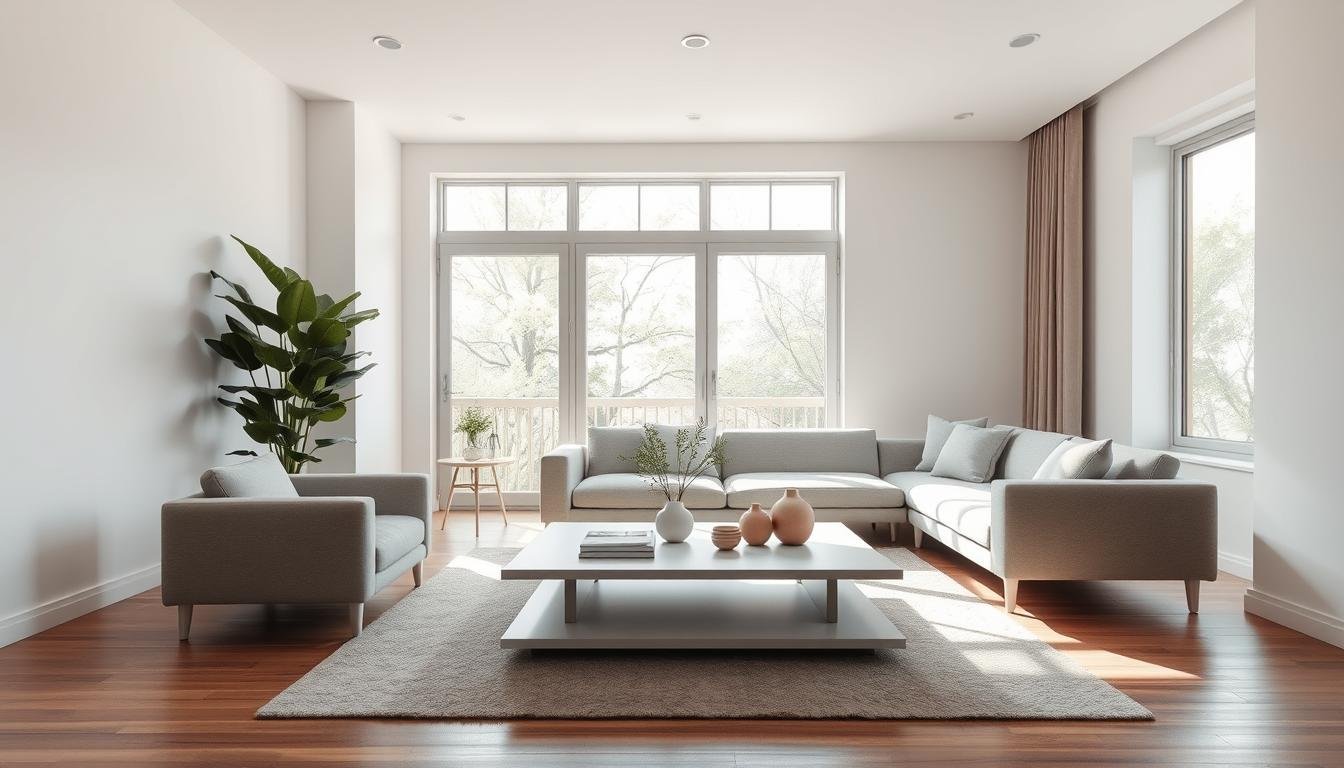
When selecting furniture, opt for clean lines and simple shapes. This approach aligns with modern design principles and creates a calm, uncluttered atmosphere. Multifunctional pieces are ideal for minimalist spaces. A coffee table with hidden storage or a sofa bed can serve dual purposes without adding visual clutter.
Quality trumps quantity in minimalist design. Invest in well-crafted, durable pieces that will stand the test of time. This approach not only supports sustainable living but also reduces the need for frequent replacements.
“Less is more when it comes to minimalist furniture. Choose pieces that serve a purpose and bring joy to your space.”
Consider sustainable materials when furnishing your minimalist home. Bamboo, reclaimed wood, and recycled metals are eco-friendly options that add character to your space. These choices reflect a commitment to both minimalism and environmental consciousness.
| Furniture Type | Minimalist Features | Sustainability Factor |
|---|---|---|
| Sofa | Clean lines, neutral color | Organic cotton upholstery |
| Dining Table | Simple design, no ornate details | Reclaimed wood |
| Bed Frame | Low profile, no headboard | Sustainably sourced timber |
By carefully selecting furniture that aligns with minimalist principles, you can create a serene and functional living space that reflects your commitment to modern design and sustainable living.
Minimalist Home Decor: Essential Elements and Accessories
Minimalist home decor focuses on creating a peaceful space with carefully chosen elements. This approach to simple living embraces the idea that less is more. Let’s explore key components that bring minimalist style to life in your home.
Streamlined Storage Solutions
In minimalist spaces, smart storage is crucial. Built-in cabinets and hidden compartments keep clutter at bay. Multi-functional furniture, like ottomans with storage or floating shelves, maximize space while maintaining a clean look. These solutions support a clutter-free environment, essential for modern design and simple living.
Minimalist Wall Art and Decor
Wall decor in minimalist homes is intentional and impactful. Large, simple art pieces or a gallery wall with matching frames create focal points without overwhelming the space. Natural elements like wooden sculptures or a single potted plant add warmth to the room. Remember, in minimalist home decor, each item should serve a purpose or bring joy.
Lighting Choices for a Minimalist Aesthetic
Lighting plays a vital role in minimalist interiors. Opt for fixtures with clean lines and simple shapes. Pendant lights with geometric designs or sleek floor lamps complement the minimalist style. Natural light is prized in minimalist spaces, so keep windows uncluttered to let sunlight flow freely. This approach to lighting enhances the overall aesthetic while creating a bright, open atmosphere.
“Simplicity is the ultimate sophistication.”
By focusing on these essential elements, you can create a minimalist home that embodies simple living and modern design principles. Remember, the goal is to curate a space that feels both stylish and serene.
Embracing Scandinavian Style in Your Minimalist Design
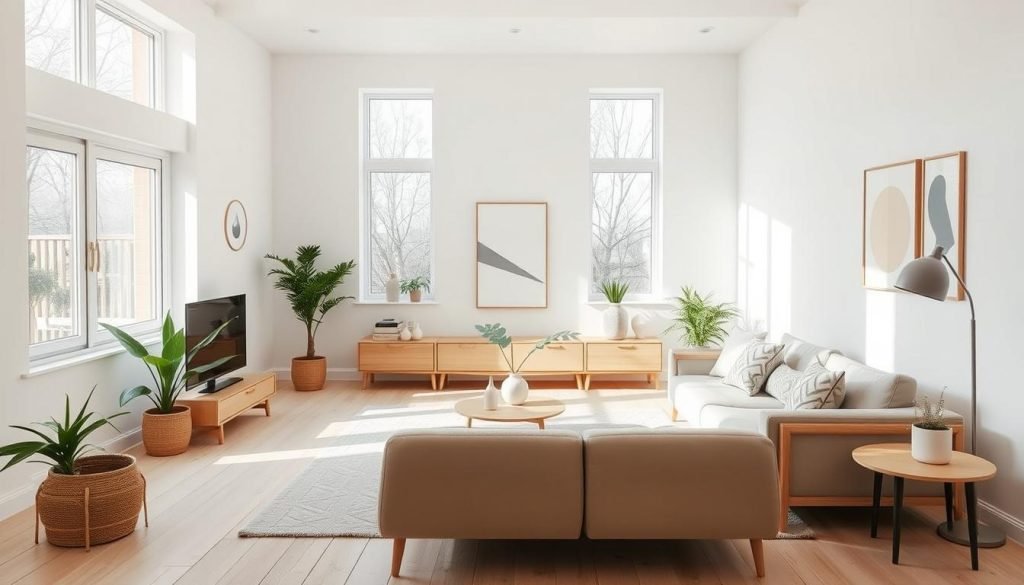
Scandinavian style seamlessly blends with minimalism, creating spaces that are both functional and aesthetically pleasing. This design approach emphasizes clean lines, natural materials, and a focus on simplicity that aligns perfectly with modern design principles.
The hallmark of Scandinavian style is its use of light colors, particularly white, to create bright and airy spaces. This palette complements the minimalist ethos by promoting a sense of openness and tranquility. Natural wood elements, such as pine or oak flooring and furniture, add warmth to the otherwise cool color scheme.
Functionality is key in Scandinavian minimalism. Furniture pieces serve dual purposes, often incorporating storage solutions to maintain clutter-free living areas. For example, a coffee table might double as a storage unit, or a bed frame could include built-in drawers.
“In Scandinavian design, every object has a purpose, and beauty is never sacrificed for function.”
Textile accents play a crucial role in softening the minimalist aesthetic. Cozy throws, plush rugs, and comfortable cushions introduce texture and comfort without overwhelming the space. These elements embody the Danish concept of “hygge,” which emphasizes coziness and well-being.
| Scandinavian Style Element | Minimalist Interpretation |
|---|---|
| Light wood tones | Natural, uncluttered surfaces |
| White walls | Clean, expansive backdrop |
| Functional furniture | Multipurpose, streamlined pieces |
| Textile accents | Subtle texture and warmth |
By incorporating these Scandinavian design elements, you can create a minimalist space that feels inviting and personal while maintaining a clean, uncluttered aesthetic.
Sustainable Living Through Minimalist Home Decor
Minimalism and sustainable living go hand in hand. By embracing a minimalist approach to home decor, we can reduce waste and make eco-friendly choices. This mindset aligns perfectly with the tiny house movement, promoting a simpler lifestyle with less environmental impact.
Eco-Friendly Material Choices
Selecting sustainable materials is key to creating an environmentally conscious home. Opt for bamboo, reclaimed wood, or recycled plastics when choosing furniture and accessories. These materials not only look great but also reduce your carbon footprint.
Mindful Consumption in Home Decorating
Mindful consumption is at the heart of minimalist decor. Before buying new items, ask yourself if they’re truly necessary. This approach helps reduce clutter and supports sustainable living practices. Consider the following tips:
- Buy quality items that last longer
- Choose multipurpose furniture
- Invest in timeless pieces rather than trendy ones
Upcycling and Repurposing in Minimalist Spaces
Upcycling breathes new life into old items, reducing waste and adding character to your space. Get creative with repurposing everyday objects into unique decor pieces. This practice not only supports sustainable living but also adds a personal touch to your minimalist home.
| Item | Upcycling Idea | Benefit |
|---|---|---|
| Glass jars | Vases or storage containers | Reduces plastic use |
| Wooden pallets | Coffee table or bookshelf | Saves trees, adds rustic charm |
| Old ladder | Towel rack or plant stand | Unique decor, prevents waste |
By incorporating these sustainable practices into your minimalist decor, you’ll create a home that’s not only stylish but also environmentally responsible.
Creating a Minimalist Oasis in Small Spaces
The tiny house movement has sparked a revolution in simple living. It’s all about making the most of limited square footage through smart design choices. Minimalist home decor shines in these compact spaces, proving that less truly can be more.
To create an airy feel in small areas, opt for light colors and multi-functional furniture. A sofa that doubles as a guest bed or a coffee table with hidden storage can be game-changers. Vertical storage solutions like wall-mounted shelves help keep floors clear and draw the eye upward, making rooms feel taller.
Mirrors are your secret weapon in tiny spaces. They reflect light and create the illusion of depth, instantly making rooms feel more spacious. Pair them with strategically placed lighting to brighten dark corners and enhance the overall sense of openness.
Remember, clutter is the enemy of small-space living. Embrace the minimalist mantra of “a place for everything and everything in its place.” Regular decluttering sessions will help maintain your minimalist oasis, ensuring your space stays calm and inviting. With these tips, you can turn even the smallest apartment into a serene haven of simple living.